
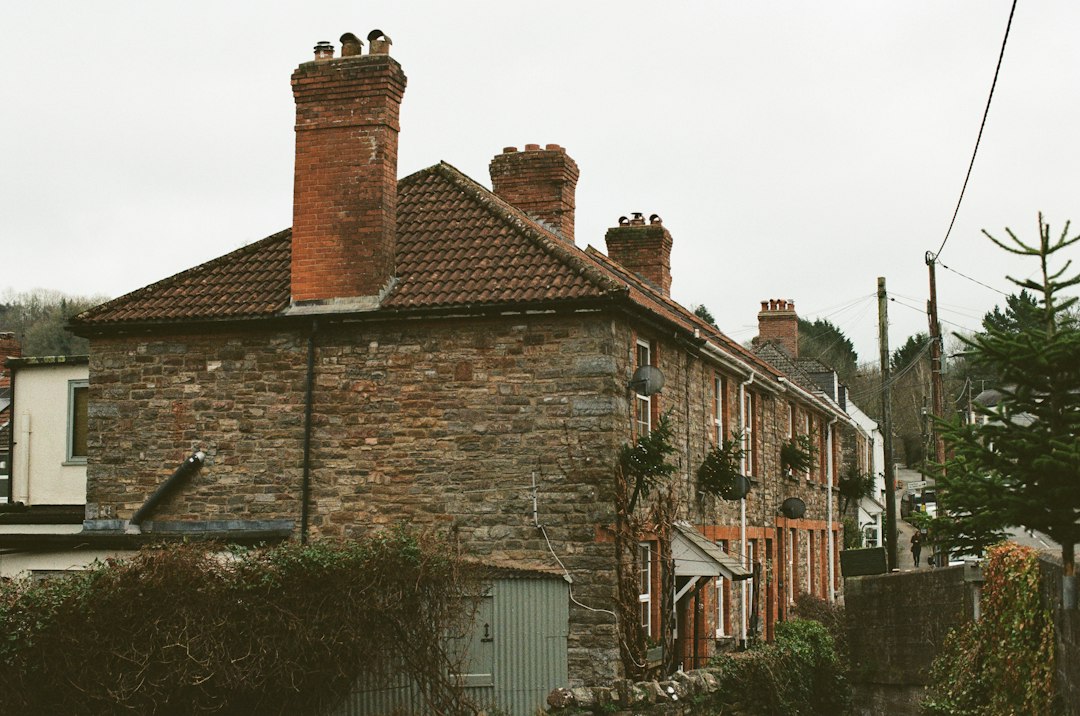
A New Top for a Framed Chimney
About Your House
Give the street, a rough build year and why chimney chase cover came to mind. We reply with next steps.
The Job on an Older Chimney
Some chimneys on older houses are wood boxes, not brick. Later additions and replaced fireplaces often have a framed chase with a metal top, and once that top rusts it lets water into the wood below. We take measurements on the roof, have a stainless cover made with a raised center and turned-down edges, and fit it with a new collar and cap. Soft wood under the old top is noted and priced before it is closed in.
What a Chase Is and Why Its Top Fails
Not every chimney on an older home is brick. A good share of houses in Fountain Valley and Westminster, especially those finished or added onto from the 1970s forward, burn in a prefabricated metal firebox whose pipe climbs through a tall framed enclosure on an outside wall or up through the roof. From the street that enclosure looks like a chimney, clad to match the walls of the house. Its top is a sheet steel lid with an opening the pipe passes through, sealed at the pipe by a collar, with a cap riding above. On many houses that lid was plain galvanized steel. After thirty or forty summers of sun and salt air it rusts, dips in the middle so rain sits on it, and lets water through pinholes and along its folded edges. The water then trickles down inside the enclosure, unseen, soaking studs and sheathing and dripping onto the firebox, sometimes for years before a stain shows indoors.
The visit starts on the roof. We look at the lid for rust, holes and a dished center, and at its edges where they lap over the siding or stucco. The storm collar, the band that seals where the pipe leaves the lid, is checked for gaps and cracked sealant, and so is the cap. Where we can see down inside the enclosure, we look for darkened framing, soft wood and rust running down the pipe. If the framing is sound, the job is simply a new lid and collar. If years of drips have rotted the top of the enclosure, the wood has to be repaired before a new lid goes on, and the quote says so, with that work on its own line so you can see why the price moved.
A Cover Made for Your Chase
No two enclosures are quite the same size, and the pipe is rarely dead center, so every lid we fit starts with a tape measure on the roof. The new one is bent from stainless steel, which stands up to salt air far longer than galvanized, and it is shaped with a raised peak or creased panels so rain sheds toward the edges instead of collecting. Its skirt drops a few inches down each side and kicks outward at the bottom, which throws drips away from the cladding. A fresh storm collar is sealed around the pipe, and the cap is refitted, or renewed when rust has eaten into it. On a house a few miles from the shore, that choice of metal is the difference between a lid that lasts and one that needs replacing again in a decade.
Price comes from the measurements and the state of the wood underneath: a small lid on sound framing is one job, and a wide enclosure with two pipes and rotted plates is another. The written quote separates the lid, the collar, the cap and any carpentry, so nothing is lumped together. If the prefabricated fireplace inside is near the end of its service life, we mention it, since some owners would rather replace the firebox and the lid in one project than pay for two visits. On the contact page, note whether you see rust streaks running down the siding, damp near the fireplace, or a lid that looks bowed from the yard, and give the street address so we can plan access to the roof. If the enclosure has two pipes, the new lid gets two openings and two collars.
What You Can Expect From Barclay Chimney Group
Materials First
Mortar, brick and tile are read before any repair is chosen
Original Kept
Sound brick and period details stay where they are
Price on Paper
Every repair carries a written figure before work
Photos Both Ways
Before and after pictures go into your report
Where we offer chimney chase cover
Pick a place to read about the houses there, their usual age and what that means for this work.
Nothing found under that name. Check the spelling, or look on the areas page for the full list.
More Services
Chimney Sweep
Old clay flues brushed with a head cut to the tile, the smoke shelf emptied, and any chipped liner we uncover noted.
Details →Chimney Inspection
A Level 1 look over the reachable parts of an older chimney, with brick, crown and damper photographed for your records.
Details →Chimney Repair
Repairs on aging chimneys, from a loose top course to a split flue tile, planned around the brick and mortar already there.
Details →Fireplace Inspection
A hearth-level check for original fireplaces: firebrick, damper, smoke chamber and wood trim older builders set too close.
Details →Fireplace Repair
Original fireplaces put back into safe use: loose firebrick, a seized damper, a rough smoke chamber or a cracked hearth.
Details →Chimney Level 2 Inspection
A recorded camera pass up an older flue, with roof and framing checks, for sales, quakes, fires and appliance changes.
Details →Chimney Cap Installation
A cap sized to an old flue, or a custom cover spanning two, to keep storms off clay tile and embers off the roof.
Details →Chimney Flashing Repair
Old tar patches peeled back, then new step and counter flashing set into a cut joint where the roof meets the brick.
Details →Chimney Masonry Repair
Repointing, brick swaps and top-course work on older chimneys, with mortar soft enough to suit the original brick.
Details →Chimney Rebuilds
When an old stack is past repointing, the failed section is rebuilt and relined while keeping the look of the house.
Details →Fireplace Cleaning
A room-side clean of an original firebox, smoke shelf and doors, done slowly enough to spot what decades of fires have worn.
Details →Gas Fireplace Cleaning
Gas sets in older masonry fireplaces cleaned, ceramic logs returned to their marks, and the damper stop confirmed.
Details →Gas Fireplace Repair
Gas units and log sets in older homes traced with a meter, from a weak pilot to a valve that refuses to open.
Details →Fireplace Remodel
Refacing and hearth work that respects an older fireplace's period, with flue and clearances checked before any tile is chosen.
Details →Fireplace Inserts
An insert set into an old masonry firebox with a full-height liner, so a drafty original fireplace can warm the room.
Details →Pellet Stove Repair
Pellet stoves added to older homes, serviced when feed, flame or fans misbehave, with the vent run looked at too.
Details →Wood Stove Repair
Wood stoves in older houses kept sealed and drawing: gaskets, baffles, firebrick and the pipe into an old chimney.
Details →Gas Logs
A gas log set fitted to an original fireplace, with the burner matched to the box and the damper set for venting.
Details →Chimney Seismic Retrofit
Unreinforced brick chimneys on older houses tied back or rebuilt lighter, so a strong quake has less to throw.
Details →Chimney Crown Repair
Crowns on older chimneys, often just troweled mortar, repaired or recast so rain runs off instead of into the brick.
Details →Dryer Vent Cleaning
Lint cleared from long or added-on dryer ducts, common in older houses where the laundry moved during a remodel.
Details →Chimney Liner Installation
A stainless liner run inside a cracked or missing clay flue, common in older chimneys, sized to the fireplace or appliance.
Details →Chimney Leak Repair
Water traced on older chimneys through crown, flashing and brick, then repaired at the point it actually enters.
Details →Chimney Waterproofing
Old brick treated with a repellent that lets it breathe, after open joints and the crown have been dealt with.
Details →Chimney Damper Repair
Old cast-iron throat dampers freed, rebuilt or replaced, or retired in favor of a top-mounted damper on a gasket.
Details →