
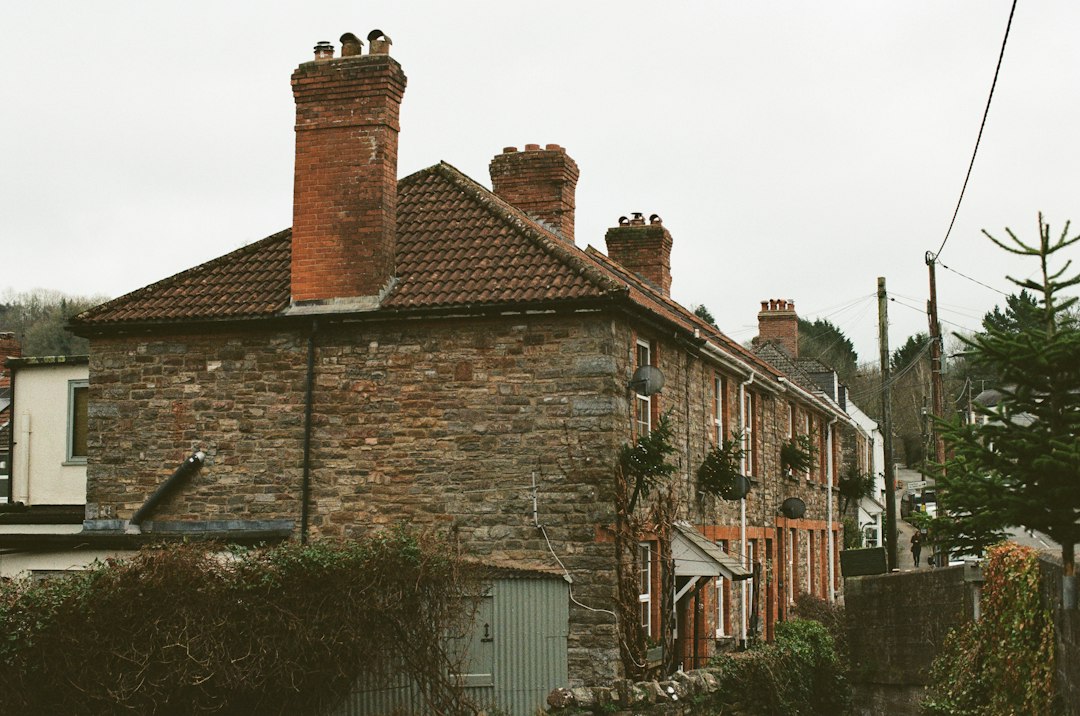
Fixing the Chimney Your House Already Has
About Your House
Give the street, a rough build year and why chimney repair came to mind. We reply with next steps.
The Job on an Older Chimney
Older chimneys rarely fail in one place. A top course loosened by years of small quakes, a crazed crown, a flue tile split by some forgotten chimney fire: we sort them by risk, then match new work to the house, with soft mortar where the old joints are lime and brick picked to sit beside the original. Each repair gets a written scope and price before anyone carries a bucket up the ladder.
Repair That Keeps the Original Chimney Standing
The first question on an old chimney is not what to replace but what has actually failed. A stack from the 1930s can have perfect brick and a ruined crown, or a sound crown sitting on joints that have washed out near the roofline. Tearing down more than the problem asks for costs money and takes away a part of the house that cannot be put back the same way. So we trace the fault first. Water stains, loose bricks in the yard, smoke in the room and a rusty damper each lead somewhere different, and the fix follows the cause. Typical work on an older chimney includes a new crown cast over the old brick, a cap where there has never been one, open joints raked and refilled, a damper put back into working order, and flashing renewed where the roof meets the masonry. Where a flue liner has cracked, the choice between repair and a new liner is explained with what each one gives you.
Mortar is where old chimneys are most often harmed by well-meant repairs. Brick fired a century ago is softer than modern brick, and the lime mortar around it was meant to give a little and wear away first, so the brick did not have to. Hard cement mortar packed into those joints does the reverse: it holds moisture against the brick face, and the brick spalls and flakes around the patch. We mix to suit the brick in front of us, softer for old work and harder only where the masonry is modern. The same thinking runs through the rest of the job. A new crown gets a gap around the flue tile so the two can move, each cap is made for the tile it covers, and patches are kept to the area that needs them. You see the scope in writing before work starts, with each item and its price listed on its own line.
How a Repair Visit Runs
Most repair jobs begin with an inspection, either one you have already had or one we do on the first visit. From the findings we write a scope that says what is wrong, where it is and what we propose, and each line carries its own price. The roof work, a crown or a cap, is often a single day. Repointing and brick replacement take longer, partly because mortar needs time to cure before the chimney sees a fire. Some repairs have a listed price on this site: a leak repair is $600 to $3,600, higher when several parts let water in. A cap is quoted after we measure; flue size and metal set its price. Everything else is priced against what we measure, since two chimneys from the same street can differ by three courses of loose brick and a flue nobody has seen in years.
Older chimneys in Santa Ana and Costa Mesa often reach us after a home inspection report names a problem without saying how serious it is. In that case we read the report, go to the spot it names and tell you whether it is a quick fix or the visible edge of something larger. We also say when a repair is not worth doing yet. A hairline in a crown that is otherwise sound can wait a season if the cap is keeping rain out of the flue; a brick loose at the top of a stack above a walkway cannot. Ranking the work that way lets owners of older houses spread the cost and still put safety first. For questions about a particular chimney, the contact page is the quickest route; describe what you have noticed and where on the house it is.
What You Can Expect From Barclay Chimney Group
Materials First
Mortar, brick and tile are read before any repair is chosen
Original Kept
Sound brick and period details stay where they are
Price on Paper
Every repair carries a written figure before work
Photos Both Ways
Before and after pictures go into your report
Where we offer chimney repair
Pick a place to read about the houses there, their usual age and what that means for this work.
CA
Chimney Repair in Fountain Valley
Just 1% of houses here are older than 1950, so a historic brick stack is a rare find on these streets. What deserves care instead is the first-owner hearth and damper of a 1970s house, kept working instead of torn out.
Open this pageCA
Chimney Repair in Westminster
Ranch houses on regular lots fill most streets, and plenty still keep the fireplace the builder gave them. A Level 2 inspection here reads that firebox, damper and flue together, as the house intended, before any repair gets named.
Open this pageCA
Chimney Repair in Costa Mesa
Only 39% of units stand detached, and many rebuilds went to gas. That leaves the surviving brick hearths of older houses worth guarding, so we repair their joints and firebox panels before anyone talks of removal.
Open this pageCA
Chimney Repair in Santa Ana
In Floral Park and the older blocks, 1920s and 1930s revival houses still stand on their original brick chimneys. Those flues were laid for open wood fires, so our Level 2 inspection asks what the old liner and damper can take today.
Open this pageMore Services
Chimney Sweep
Old clay flues brushed with a head cut to the tile, the smoke shelf emptied, and any chipped liner we uncover noted.
Details →Chimney Inspection
A Level 1 look over the reachable parts of an older chimney, with brick, crown and damper photographed for your records.
Details →Fireplace Inspection
A hearth-level check for original fireplaces: firebrick, damper, smoke chamber and wood trim older builders set too close.
Details →Fireplace Repair
Original fireplaces put back into safe use: loose firebrick, a seized damper, a rough smoke chamber or a cracked hearth.
Details →Chimney Level 2 Inspection
A recorded camera pass up an older flue, with roof and framing checks, for sales, quakes, fires and appliance changes.
Details →Chimney Cap Installation
A cap sized to an old flue, or a custom cover spanning two, to keep storms off clay tile and embers off the roof.
Details →Chimney Flashing Repair
Old tar patches peeled back, then new step and counter flashing set into a cut joint where the roof meets the brick.
Details →Chimney Masonry Repair
Repointing, brick swaps and top-course work on older chimneys, with mortar soft enough to suit the original brick.
Details →Chimney Rebuilds
When an old stack is past repointing, the failed section is rebuilt and relined while keeping the look of the house.
Details →Fireplace Cleaning
A room-side clean of an original firebox, smoke shelf and doors, done slowly enough to spot what decades of fires have worn.
Details →Gas Fireplace Cleaning
Gas sets in older masonry fireplaces cleaned, ceramic logs returned to their marks, and the damper stop confirmed.
Details →Gas Fireplace Repair
Gas units and log sets in older homes traced with a meter, from a weak pilot to a valve that refuses to open.
Details →Fireplace Remodel
Refacing and hearth work that respects an older fireplace's period, with flue and clearances checked before any tile is chosen.
Details →Fireplace Inserts
An insert set into an old masonry firebox with a full-height liner, so a drafty original fireplace can warm the room.
Details →Pellet Stove Repair
Pellet stoves added to older homes, serviced when feed, flame or fans misbehave, with the vent run looked at too.
Details →Wood Stove Repair
Wood stoves in older houses kept sealed and drawing: gaskets, baffles, firebrick and the pipe into an old chimney.
Details →Gas Logs
A gas log set fitted to an original fireplace, with the burner matched to the box and the damper set for venting.
Details →Chimney Seismic Retrofit
Unreinforced brick chimneys on older houses tied back or rebuilt lighter, so a strong quake has less to throw.
Details →Chimney Crown Repair
Crowns on older chimneys, often just troweled mortar, repaired or recast so rain runs off instead of into the brick.
Details →Dryer Vent Cleaning
Lint cleared from long or added-on dryer ducts, common in older houses where the laundry moved during a remodel.
Details →Chimney Liner Installation
A stainless liner run inside a cracked or missing clay flue, common in older chimneys, sized to the fireplace or appliance.
Details →Chimney Leak Repair
Water traced on older chimneys through crown, flashing and brick, then repaired at the point it actually enters.
Details →Chimney Waterproofing
Old brick treated with a repellent that lets it breathe, after open joints and the crown have been dealt with.
Details →Chimney Damper Repair
Old cast-iron throat dampers freed, rebuilt or replaced, or retired in favor of a top-mounted damper on a gasket.
Details →Chimney Chase Cover
Rusted metal tops on framed chimneys replaced with a stainless cover made to measure, common on later additions.
Details →