
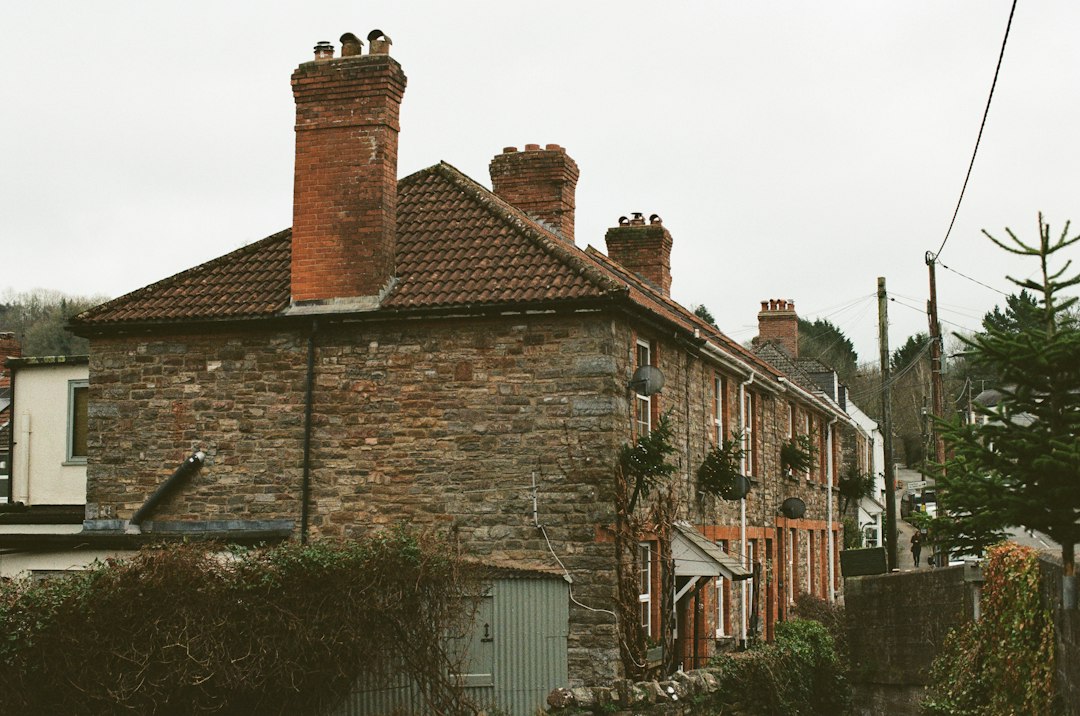
A New Lining Inside an Old Chimney
About Your House
Give the street, a rough build year and why chimney liner installation came to mind. We reply with next steps.
The Job on an Older Chimney
Many chimneys built before the 1950s have clay tile cracked by age and quakes, and some have no liner at all. A stainless liner fed down the old flue gives exhaust a sealed path past the cracks. We size it to the fireplace, stove or insert it serves, wrap it where brick sits close to wood, and finish the top with a plate and cap. Height, diameter and roof access set the written price.
When an Old Flue Needs a New Lining
A flue lining keeps heat and exhaust inside a smooth, sealed passage so they do not reach the brick, the mortar and the framing around the chimney. In chimneys built from the 1920s onward the lining is usually clay tile, and in some earlier houses there is none at all, just the inside face of the brick. Both age badly. Clay tiles crack from heat, from a chimney fire or from a quake, and their joints open up, and a flue with no tile lets exhaust seep straight into the masonry. A camera inspection shows how bad things are, and the usual triggers for one in an older house are a sale, a quake, a chimney fire or a plan to switch to a different appliance. When the lining has cracked or gaps have opened, or when a new insert or stove needs a smaller flue, a new liner is usually the cleanest fix.
Most liners we fit are stainless steel, flexible or rigid, sized to the appliance or fireplace they serve. The liner runs from the bottom connection to the top of the chimney inside the old flue. Where the liner leaves the crown, a steel collar plate shuts the gap between it and the old tile, and a cap goes over the end. Some chimneys need the liner wrapped in insulation, especially where the old flue has gaps to the framing or where the maker of a stove calls for it. In older chimneys the throat is the tight spot: the liner has to get past the damper and up through the smoke chamber, and an old cast damper frame is often cut out to clear the way. Where the old flue is too narrow or has an offset, we assess whether a liner can be fed through or whether part of the old tile needs to come out first.
How a Liner Job Is Scoped
Every liner quote starts with what the chimney will serve. A liner for an open wood fireplace, for a gas insert, for a wood stove and for a pellet stove each has its own size and type, and the appliance maker's instructions often set the rules. Then we look at the chimney itself: its height, any offsets or bends in the old flue, the condition of the brick and crown at the top and whether any old tile has to be removed for the liner to fit. Those things decide the liner type, the length, whether insulation is needed and what has to be done at the top and bottom. The written quote lists each of them, together with any crown or brick repair that should come first. Where the brick needs work before a liner goes in, we say which items can wait and which cannot.
Many older chimneys carry two flues, one for the fireplace and a smaller one that once vented a gas appliance long since moved or replaced, and we look at both, since an unused flue may need capping or lining too. Owners in Costa Mesa and Santa Ana often reline in the same project as a gas insert, which keeps the work to one visit and one quote. If an earlier inspection found cracked tile, sum up what it said in a few lines on the contact page, then add what burns in the fireplace today and what you would like it to burn in future. We will arrange a visit to measure and confirm the scope, and if a camera look is needed first, we tell you that and its price before booking it.
What You Can Expect From Barclay Chimney Group
Materials First
Mortar, brick and tile are read before any repair is chosen
Original Kept
Sound brick and period details stay where they are
Price on Paper
Every repair carries a written figure before work
Photos Both Ways
Before and after pictures go into your report
Where we offer chimney liner installation
Pick a place to read about the houses there, their usual age and what that means for this work.
Nothing found under that name. Check the spelling, or look on the areas page for the full list.
More Services
Chimney Sweep
Old clay flues brushed with a head cut to the tile, the smoke shelf emptied, and any chipped liner we uncover noted.
Details →Chimney Inspection
A Level 1 look over the reachable parts of an older chimney, with brick, crown and damper photographed for your records.
Details →Chimney Repair
Repairs on aging chimneys, from a loose top course to a split flue tile, planned around the brick and mortar already there.
Details →Fireplace Inspection
A hearth-level check for original fireplaces: firebrick, damper, smoke chamber and wood trim older builders set too close.
Details →Fireplace Repair
Original fireplaces put back into safe use: loose firebrick, a seized damper, a rough smoke chamber or a cracked hearth.
Details →Chimney Level 2 Inspection
A recorded camera pass up an older flue, with roof and framing checks, for sales, quakes, fires and appliance changes.
Details →Chimney Cap Installation
A cap sized to an old flue, or a custom cover spanning two, to keep storms off clay tile and embers off the roof.
Details →Chimney Flashing Repair
Old tar patches peeled back, then new step and counter flashing set into a cut joint where the roof meets the brick.
Details →Chimney Masonry Repair
Repointing, brick swaps and top-course work on older chimneys, with mortar soft enough to suit the original brick.
Details →Chimney Rebuilds
When an old stack is past repointing, the failed section is rebuilt and relined while keeping the look of the house.
Details →Fireplace Cleaning
A room-side clean of an original firebox, smoke shelf and doors, done slowly enough to spot what decades of fires have worn.
Details →Gas Fireplace Cleaning
Gas sets in older masonry fireplaces cleaned, ceramic logs returned to their marks, and the damper stop confirmed.
Details →Gas Fireplace Repair
Gas units and log sets in older homes traced with a meter, from a weak pilot to a valve that refuses to open.
Details →Fireplace Remodel
Refacing and hearth work that respects an older fireplace's period, with flue and clearances checked before any tile is chosen.
Details →Fireplace Inserts
An insert set into an old masonry firebox with a full-height liner, so a drafty original fireplace can warm the room.
Details →Pellet Stove Repair
Pellet stoves added to older homes, serviced when feed, flame or fans misbehave, with the vent run looked at too.
Details →Wood Stove Repair
Wood stoves in older houses kept sealed and drawing: gaskets, baffles, firebrick and the pipe into an old chimney.
Details →Gas Logs
A gas log set fitted to an original fireplace, with the burner matched to the box and the damper set for venting.
Details →Chimney Seismic Retrofit
Unreinforced brick chimneys on older houses tied back or rebuilt lighter, so a strong quake has less to throw.
Details →Chimney Crown Repair
Crowns on older chimneys, often just troweled mortar, repaired or recast so rain runs off instead of into the brick.
Details →Dryer Vent Cleaning
Lint cleared from long or added-on dryer ducts, common in older houses where the laundry moved during a remodel.
Details →Chimney Leak Repair
Water traced on older chimneys through crown, flashing and brick, then repaired at the point it actually enters.
Details →Chimney Waterproofing
Old brick treated with a repellent that lets it breathe, after open joints and the crown have been dealt with.
Details →Chimney Damper Repair
Old cast-iron throat dampers freed, rebuilt or replaced, or retired in favor of a top-mounted damper on a gasket.
Details →Chimney Chase Cover
Rusted metal tops on framed chimneys replaced with a stainless cover made to measure, common on later additions.
Details →