
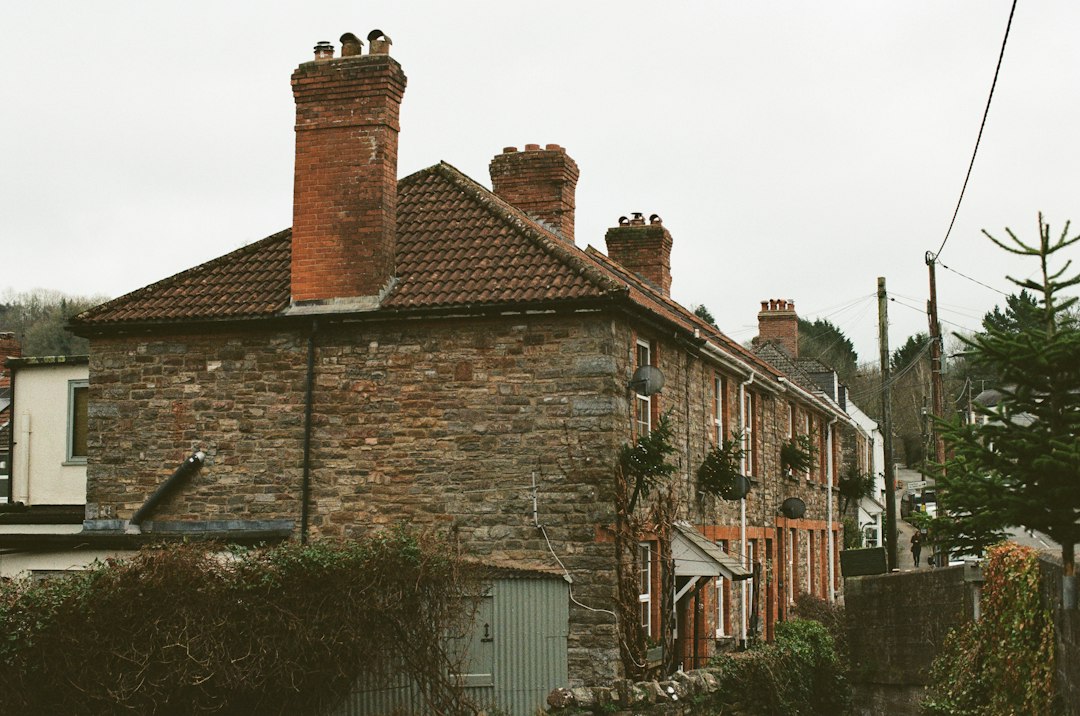
Make an Unreinforced Brick Chimney Less Likely to Fall
About Your House
Give the street, a rough build year and why chimney seismic retrofit came to mind. We reply with next steps.
The Job on an Older Chimney
Brick chimneys built before reinforcing steel was standard were laid as plain stacks, and in a hard shake they can snap where they leave the roof. Depending on the chimney, a retrofit can be steel bracing on the roof, ties to the house framing, or a light framed top over a metal flue in place of the upper brick. We judge the mortar first, since a brace is only as good as what it holds.
Why Old Brick Chimneys Worry Quake Planners
Before steel reinforcement became normal practice, brick chimneys were simply stacked and mortared, with nothing tying the top to the rest of the house. In a strong quake that is a problem of weight and stiffness. When the ground rolls, the timber frame flexes and recovers while the masonry, unable to flex, takes the blows, and the brick gives way, most often right where the stack clears the roof. Older houses in Santa Ana and Costa Mesa, and the oldest homes scattered among the newer tracts in Westminster, are likely candidates. The 1987 and 1994 quakes in Southern California left many such chimneys cracked or toppled, some onto roofs, driveways and walkways. A retrofit does not make a brick chimney quake-proof, but it lowers the chance that the upper part comes down in pieces.
Which approach fits comes down to two questions: is the brick still sound, and will the fireplace keep burning wood? Where the masonry is solid, a steel brace can link the upper chimney to the roof structure so it has support above the roofline. Steel straps or bands can tie the chimney to the house framing at points along its height. Where the top is already cracked or loose, bracing makes little sense, and the better answer is often to take the brick down to the roofline and rebuild that part with steel inside it, or, if the fireplace will no longer burn wood, to replace the top with a light framed chase and a metal flue. We do not cite code sections or promise rebates; we describe what each option involves for your house. Each one also changes the roofline in its own way, and on a period house we take that into account.
The Visit and the Written Scope
A retrofit starts with the condition of the chimney. Steel added to a sound stack gives it support; steel added to a crumbling one just holds the crumbs in place. On the visit we look at the stack above the roof for cracks, loose courses, lean and the state of the mortar, and, from the attic, at the joists and rafters that sit closest to the brick. Where the flue is accessible, a camera look inside shows whether past quakes have cracked the lining; that matters if the fireplace will stay in use. We also ask how you use the fireplace now and plan to later, since an option that suits a chimney burning wood every week may not suit one that is purely decorative. Any finding that affects safety right now, such as a brick loose above a door or path, is pointed out before we leave.
The written scope that follows sets out the approach we recommend and why, what is fixed to what, whether any brick comes down, what the top of the chimney will look like afterward, and the rate for extra brick work if the stack hides more damage than shows. Nothing is ordered until you agree. Where a rebuild is involved, it includes the new crown, cap and flashing. Pricing comes from that scope, since a short single-flue stack and a tall double-flue chimney are very different jobs. Owners planning other quake work on an older house, such as foundation bolting, sometimes do the chimney at the same time. To start, go to the contact page with a rough height for the stack above your roofline and a note on any cracking or loose brick you have seen.
What You Can Expect From Barclay Chimney Group
Materials First
Mortar, brick and tile are read before any repair is chosen
Original Kept
Sound brick and period details stay where they are
Price on Paper
Every repair carries a written figure before work
Photos Both Ways
Before and after pictures go into your report
Where we offer chimney seismic retrofit
Pick a place to read about the houses there, their usual age and what that means for this work.
Nothing found under that name. Check the spelling, or look on the areas page for the full list.
More Services
Chimney Sweep
Old clay flues brushed with a head cut to the tile, the smoke shelf emptied, and any chipped liner we uncover noted.
Details →Chimney Inspection
A Level 1 look over the reachable parts of an older chimney, with brick, crown and damper photographed for your records.
Details →Chimney Repair
Repairs on aging chimneys, from a loose top course to a split flue tile, planned around the brick and mortar already there.
Details →Fireplace Inspection
A hearth-level check for original fireplaces: firebrick, damper, smoke chamber and wood trim older builders set too close.
Details →Fireplace Repair
Original fireplaces put back into safe use: loose firebrick, a seized damper, a rough smoke chamber or a cracked hearth.
Details →Chimney Level 2 Inspection
A recorded camera pass up an older flue, with roof and framing checks, for sales, quakes, fires and appliance changes.
Details →Chimney Cap Installation
A cap sized to an old flue, or a custom cover spanning two, to keep storms off clay tile and embers off the roof.
Details →Chimney Flashing Repair
Old tar patches peeled back, then new step and counter flashing set into a cut joint where the roof meets the brick.
Details →Chimney Masonry Repair
Repointing, brick swaps and top-course work on older chimneys, with mortar soft enough to suit the original brick.
Details →Chimney Rebuilds
When an old stack is past repointing, the failed section is rebuilt and relined while keeping the look of the house.
Details →Fireplace Cleaning
A room-side clean of an original firebox, smoke shelf and doors, done slowly enough to spot what decades of fires have worn.
Details →Gas Fireplace Cleaning
Gas sets in older masonry fireplaces cleaned, ceramic logs returned to their marks, and the damper stop confirmed.
Details →Gas Fireplace Repair
Gas units and log sets in older homes traced with a meter, from a weak pilot to a valve that refuses to open.
Details →Fireplace Remodel
Refacing and hearth work that respects an older fireplace's period, with flue and clearances checked before any tile is chosen.
Details →Fireplace Inserts
An insert set into an old masonry firebox with a full-height liner, so a drafty original fireplace can warm the room.
Details →Pellet Stove Repair
Pellet stoves added to older homes, serviced when feed, flame or fans misbehave, with the vent run looked at too.
Details →Wood Stove Repair
Wood stoves in older houses kept sealed and drawing: gaskets, baffles, firebrick and the pipe into an old chimney.
Details →Gas Logs
A gas log set fitted to an original fireplace, with the burner matched to the box and the damper set for venting.
Details →Chimney Crown Repair
Crowns on older chimneys, often just troweled mortar, repaired or recast so rain runs off instead of into the brick.
Details →Dryer Vent Cleaning
Lint cleared from long or added-on dryer ducts, common in older houses where the laundry moved during a remodel.
Details →Chimney Liner Installation
A stainless liner run inside a cracked or missing clay flue, common in older chimneys, sized to the fireplace or appliance.
Details →Chimney Leak Repair
Water traced on older chimneys through crown, flashing and brick, then repaired at the point it actually enters.
Details →Chimney Waterproofing
Old brick treated with a repellent that lets it breathe, after open joints and the crown have been dealt with.
Details →Chimney Damper Repair
Old cast-iron throat dampers freed, rebuilt or replaced, or retired in favor of a top-mounted damper on a gasket.
Details →Chimney Chase Cover
Rusted metal tops on framed chimneys replaced with a stainless cover made to measure, common on later additions.
Details →