
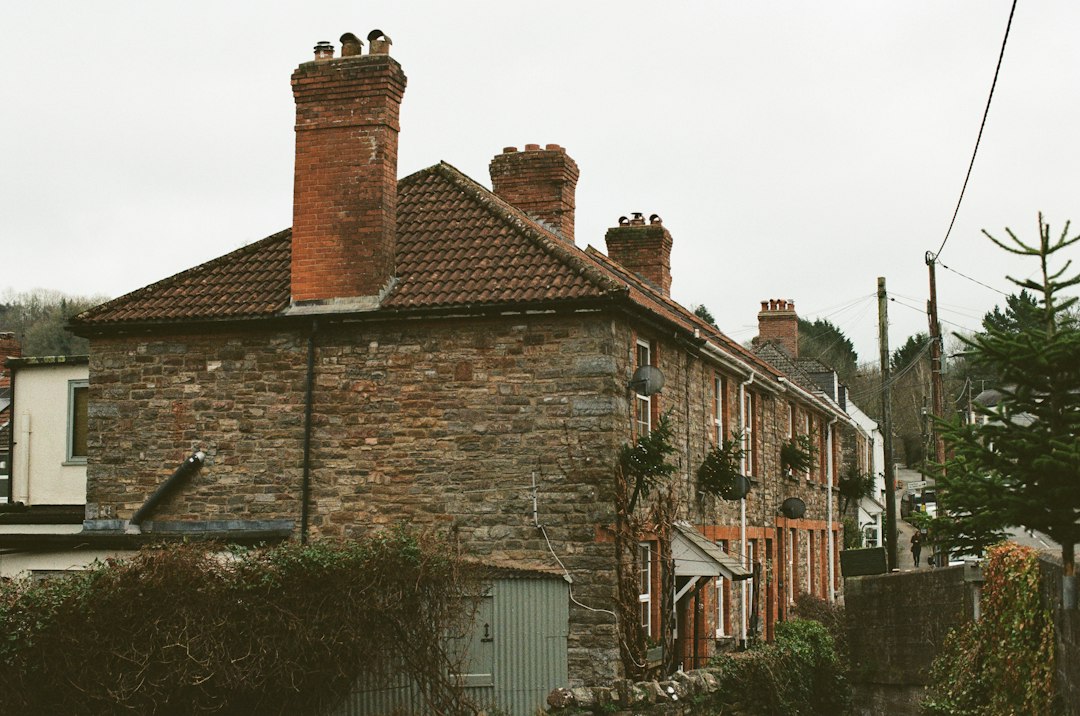
Clear the Lint From a Long or Awkward Dryer Duct
About Your House
Give the street, a rough build year and why dryer vent cleaning came to mind. We reply with next steps.
The Job on an Older Chimney
Older homes often had the laundry moved into a garage, a porch or a new addition, and the duct that came with it can be long, kinked or run in the wrong pipe. Lint packs into those runs, slows drying and holds heat. We clean the run from end to end, clear the outside hood, flag any foil or plastic duct that should be replaced, and confirm the air moves freely once the machine is back on.
Why Dryer Ducts in Older Homes Clog
In many older houses the laundry was not part of the original plan. Washers and dryers moved into garages, back porches and converted closets years after the house was built, and the dryer duct had to find its way out however it could, sometimes through a crawl space, up into an attic or along a wall to a distant opening. Long runs and many turns are where lint settles. The fine fibers that get past the dryer's own screen drop out in each bend and low spot, and over months the passage shrinks. Air leaves more slowly, each load takes longer, and the drum and the duct both run hotter than they were built for. That heat, beside a duct lined with lint, is a real fire risk, and the thin foil or plastic ducts common in older installs make it worse.
The warning signs are easy to miss until you look for them: towels that need a second cycle, a laundry area that feels close and warm, a faint scorched smell, lint caught around the outside flap or a flap that hardly lifts while the dryer runs. On the visit we slide the dryer out from the wall, unhook the short connector behind it and work along the duct with spinning brushes and compressed air, from both ends where the route allows. The outlet on the outside wall or roof is cleaned, and its flap is made to swing freely again. Then the dryer goes back, the connector is reattached, and we run it to feel for a strong stream of air leaving the house. If the airflow is still weak, the cause is in the route itself, and we say what we found.
What the Visit Finds and What It Costs
Cleaning often turns up problems with the duct itself, and older installations have more of them. We see foil ducts crushed behind the dryer, plastic duct that should not be used for a dryer at all, runs held together with screws that catch lint, ducts that sag in a crawl space and hold water, and runs simply too long for the dryer to push air through. Where we find any of these, we explain what is wrong and what it would take to fix it, whether a new rigid metal connector, a shorter route or a booster fan for a run that cannot be shortened. Repairs are priced separately from the cleaning, and nothing is changed without your agreement. Where a duct passes through a crawl space or attic, we also look for joints that have pulled apart and are blowing lint into the house rather than outside.
Cost depends on the route: its length, the number of turns and how easy the outside end is to reach, so we ask about it when you book and confirm the figure before we arrive. Owners in Westminster and Fountain Valley often have a dryer in an attached garage venting out a side wall, which is a short, simple run; older houses in Santa Ana sometimes have a long route under the floor that takes more time. In the request, mention the room that holds the laundry and the side of the house where you think the duct ends, if you know. Most households do well with a cleaning once a year, and large families running the dryer daily may need it more often. If the dryer is gas-fired, we also look at the connector and shutoff behind it while it is pulled out.
What You Can Expect From Barclay Chimney Group
Materials First
Mortar, brick and tile are read before any repair is chosen
Original Kept
Sound brick and period details stay where they are
Price on Paper
Every repair carries a written figure before work
Photos Both Ways
Before and after pictures go into your report
Where we offer dryer vent cleaning
Pick a place to read about the houses there, their usual age and what that means for this work.
Nothing found under that name. Check the spelling, or look on the areas page for the full list.
More Services
Chimney Sweep
Old clay flues brushed with a head cut to the tile, the smoke shelf emptied, and any chipped liner we uncover noted.
Details →Chimney Inspection
A Level 1 look over the reachable parts of an older chimney, with brick, crown and damper photographed for your records.
Details →Chimney Repair
Repairs on aging chimneys, from a loose top course to a split flue tile, planned around the brick and mortar already there.
Details →Fireplace Inspection
A hearth-level check for original fireplaces: firebrick, damper, smoke chamber and wood trim older builders set too close.
Details →Fireplace Repair
Original fireplaces put back into safe use: loose firebrick, a seized damper, a rough smoke chamber or a cracked hearth.
Details →Chimney Level 2 Inspection
A recorded camera pass up an older flue, with roof and framing checks, for sales, quakes, fires and appliance changes.
Details →Chimney Cap Installation
A cap sized to an old flue, or a custom cover spanning two, to keep storms off clay tile and embers off the roof.
Details →Chimney Flashing Repair
Old tar patches peeled back, then new step and counter flashing set into a cut joint where the roof meets the brick.
Details →Chimney Masonry Repair
Repointing, brick swaps and top-course work on older chimneys, with mortar soft enough to suit the original brick.
Details →Chimney Rebuilds
When an old stack is past repointing, the failed section is rebuilt and relined while keeping the look of the house.
Details →Fireplace Cleaning
A room-side clean of an original firebox, smoke shelf and doors, done slowly enough to spot what decades of fires have worn.
Details →Gas Fireplace Cleaning
Gas sets in older masonry fireplaces cleaned, ceramic logs returned to their marks, and the damper stop confirmed.
Details →Gas Fireplace Repair
Gas units and log sets in older homes traced with a meter, from a weak pilot to a valve that refuses to open.
Details →Fireplace Remodel
Refacing and hearth work that respects an older fireplace's period, with flue and clearances checked before any tile is chosen.
Details →Fireplace Inserts
An insert set into an old masonry firebox with a full-height liner, so a drafty original fireplace can warm the room.
Details →Pellet Stove Repair
Pellet stoves added to older homes, serviced when feed, flame or fans misbehave, with the vent run looked at too.
Details →Wood Stove Repair
Wood stoves in older houses kept sealed and drawing: gaskets, baffles, firebrick and the pipe into an old chimney.
Details →Gas Logs
A gas log set fitted to an original fireplace, with the burner matched to the box and the damper set for venting.
Details →Chimney Seismic Retrofit
Unreinforced brick chimneys on older houses tied back or rebuilt lighter, so a strong quake has less to throw.
Details →Chimney Crown Repair
Crowns on older chimneys, often just troweled mortar, repaired or recast so rain runs off instead of into the brick.
Details →Chimney Liner Installation
A stainless liner run inside a cracked or missing clay flue, common in older chimneys, sized to the fireplace or appliance.
Details →Chimney Leak Repair
Water traced on older chimneys through crown, flashing and brick, then repaired at the point it actually enters.
Details →Chimney Waterproofing
Old brick treated with a repellent that lets it breathe, after open joints and the crown have been dealt with.
Details →Chimney Damper Repair
Old cast-iron throat dampers freed, rebuilt or replaced, or retired in favor of a top-mounted damper on a gasket.
Details →Chimney Chase Cover
Rusted metal tops on framed chimneys replaced with a stainless cover made to measure, common on later additions.
Details →